
Perks
Halloween: The Game Perks, Cards and Decks
·
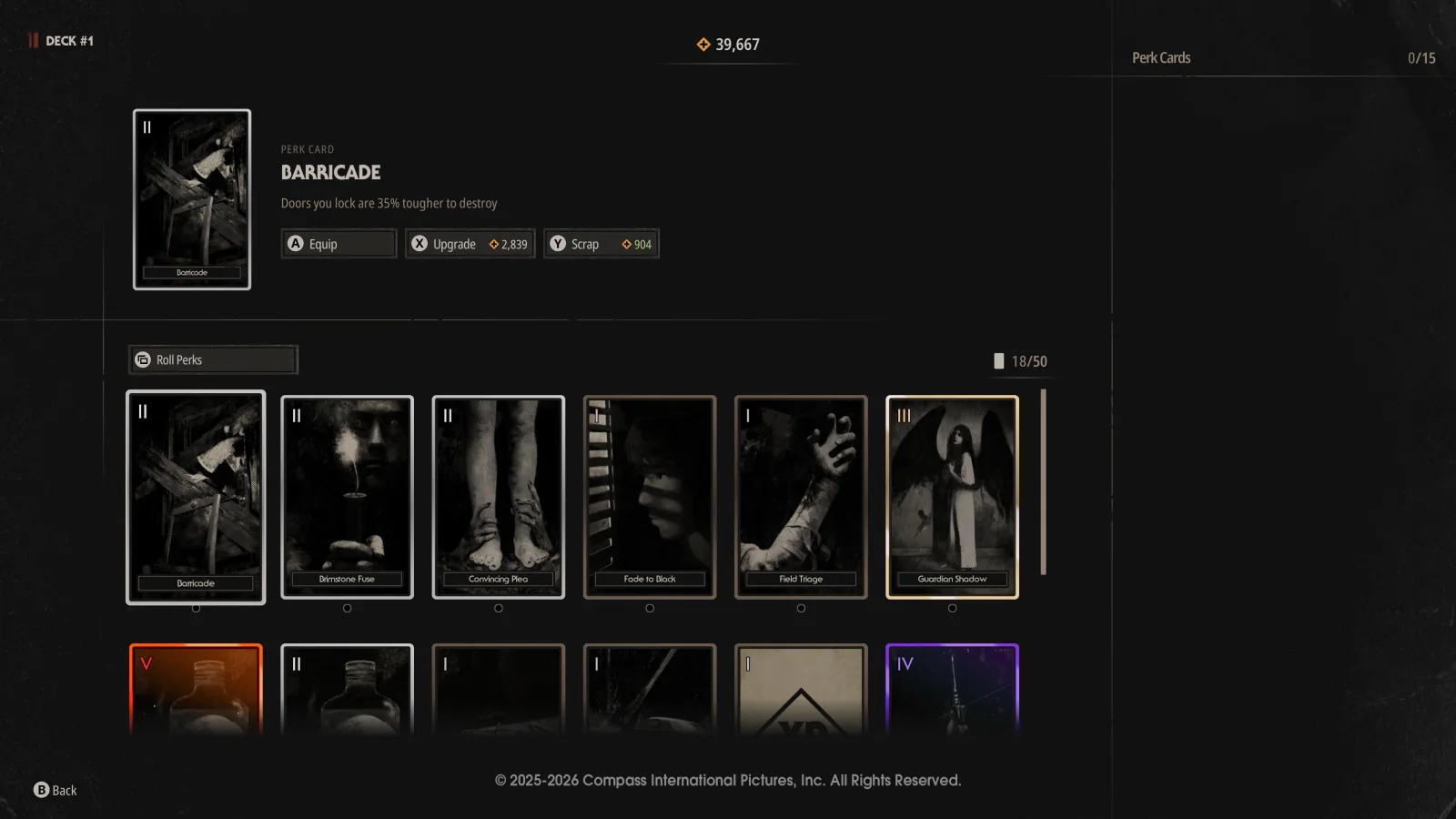
Halloween: The Game Perk Cards modify Civilian play. Complete matches to earn Perk Points, spend points to roll cards, then equip owned cards in a Civilian Perk Deck. Spending more improves higher-rarity odds, while upgrading an owned card boosts it temporarily for a set number of matches.
Points, Rolls, and Rarity
The official progression overview describes higher spending on a roll as improving the chance of higher rarity—not guaranteeing a particular card. Owned cards can also receive a points-funded upgrade that lasts for a limited number of matches.
Before spending, compare what you actually need:
| Decision | Useful question |
|---|---|
| Roll for more cards | Does my collection lack effects that fit my usual job? |
| Spend more on a roll | Am I comfortable paying more for better odds without a guaranteed result? |
| Temporarily upgrade | Will I play enough relevant matches to use the limited boost? |
| Change a deck | Are the cards I already own better suited to another Civilian or objective? |
Do not mistake an upgrade's remaining duration for permanent card progression. Check its current cost and match counter in the game before confirming. Exact odds, price brackets, and universal upgrade durations are not established by the cited overview.
September 26 Perk Point Grant
The 1.0.4 announcement grants 10,000 Perk Points to players current at the time of that September 26 announcement, following grab and performance problems. This dated grant is not a standing reward promised to every future purchaser. The announcement does not provide a claim deadline or detailed delivery instructions.
Constructing a Useful Deck
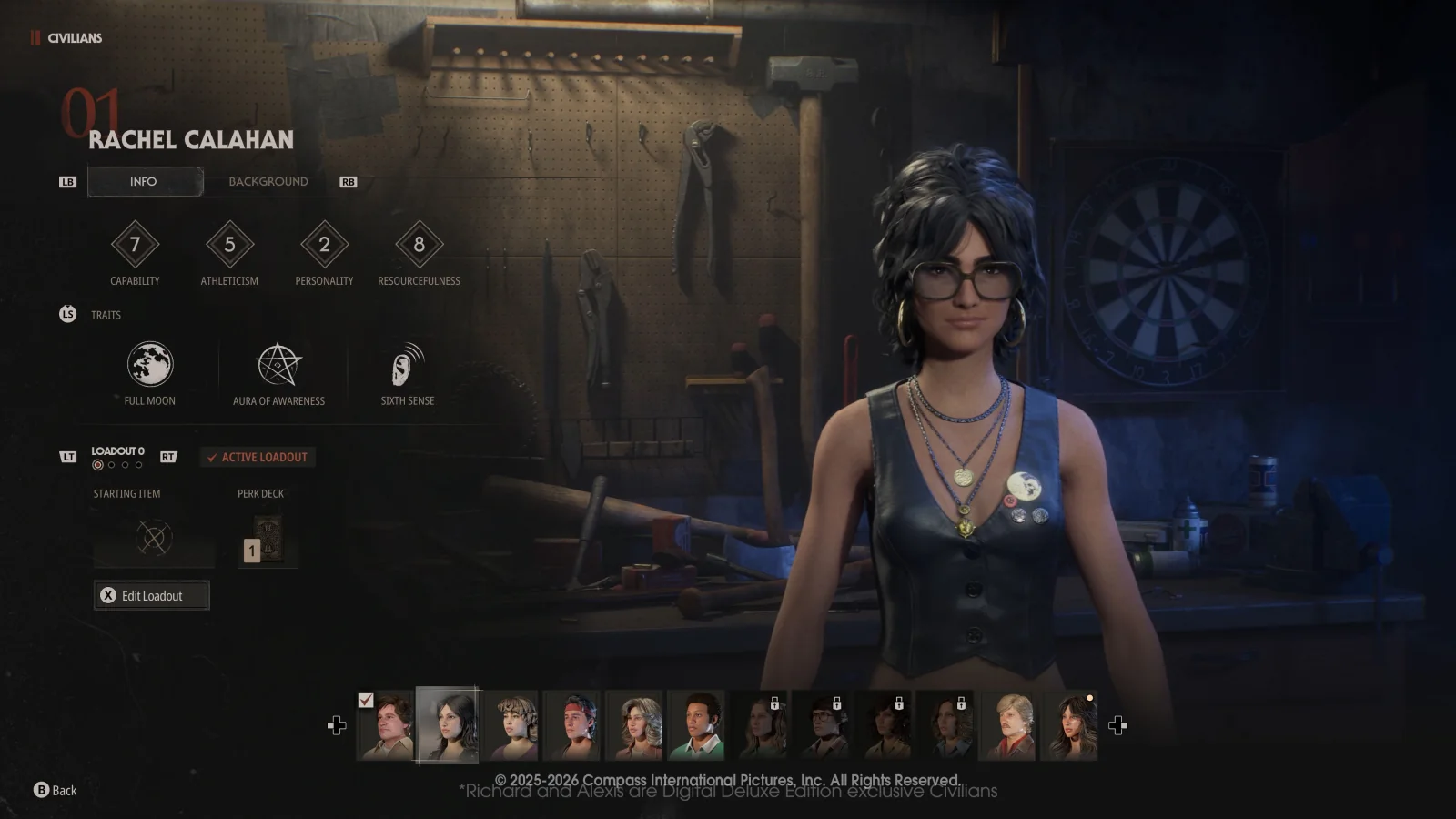
Start with the job you want to perform: warn residents, work an escape, support another player, or survive long enough to finish an objective. Then read each owned card's trigger and effect. A large-looking bonus is wasted if you rarely meet its condition.
A practical deck-building pass:
- Choose the Civilian you will actually use.
- Read that character's traits and starting item separately from the cards.
- Select effects that support the tasks you perform most often.
- Check the deck is equipped on that loadout, not merely saved.
- After several matches, replace effects you never used before spending more points.
Patch 1.0.1 limits each deck to two copies of the same perk; excess copies in existing decks were automatically unequipped. That is a duplicate limit, not a two-card deck size. A complete slot-capacity and unlock table remains unverified, so check the current deck screen.
Important Named Cards in the Current Patch
| Card | Confirmed current information | Practical implication |
|---|---|---|
| Lethal Pitch | Tiers 2–5 were reduced in 1.0.2 | Do not use pre-patch upper-tier results as current balance evidence |
| Loomis Reinforcements | A non-working card issue was fixed in 1.0.2 | Update before deciding the card has no effect |
These named changes come from official 1.0.2 notes; they are historical changes still relevant to deck advice, not new 1.0.4 adjustments. The notes do not publish complete numerical effects. See the patch summary for later gameplay changes that can affect a build.
Traits, Starting Items, and Cards
A character trait is part of the Civilian's identity. A starting item changes the opening inventory. A perk belongs to the card/deck system. Compare all three when evaluating a build, but do not describe one as unlocking the others without checking its actual requirement.
For example, a repair-focused setup should be evaluated around access to useful tools and the jobs you can reach safely—not just an attractive card rarity. A resident-focused setup should be judged on completed warnings and escorts, not only personal escapes. These are build-evaluation examples, not named meta decks.
See Characters for the four stat categories and character unlocks for the difference between Profile and Civilian progress.
Four Progression Tracks
| Track | What earns its progress |
|---|---|
| Profile | XP across roles |
| Killer | Playing Michael |
| Civilian | Playing the individual Civilian |
| Weapon | Michael dispatching victims with that equipped weapon |
The progression overview connects levels with character access, abilities, starting items, cosmetics, challenge tiers, and executions. Perk Points and temporary card upgrades are separate from these levels. For earning XP, use the progression guide.
Michael and Prestige
The official deck system is described for Civilians. Michael instead has his own traits, weapons, and selected abilities; do not transplant a Civilian perk recommendation into a killer loadout. Use the Michael guide.
Prestige becomes available at the maximum of each progression category. Available official text does not publish all caps or fully document each category's resets and retained rewards. Read the live confirmation before committing. Patch 1.0.3 keeps Passive Challenges tracking after Prestige despite their temporarily locked appearance; that fix does not establish a broader retention policy.
Sources checked
Official progression overview, the launch article containing Patch 1.0.1, and Patches 1.0.2–1.0.4, checked September 27, 2026. Deck-selection advice is editorial guidance; no card odds or rankings were independently tested.